Marketing skills for digital channels are completely different in 2026 as compared to 2020. Top digital marketing skills are changing in terms of employers’ demand and market behaviors. Fresh, enthusiastic marketers and intermediaries must focus on shifts in tools, mindset, creativity, and systemic adaptations. To facilitate marketing education, the importance of marketing skills, top digital marketing skill sets, and deep dives, including technical and soft skills in marketing. The most sought-after marketing skills in a nutshell, with career guidance and resources, are given below for upskilling in marketing aligned with market demand.
Why Digital Marketing Skills Matter
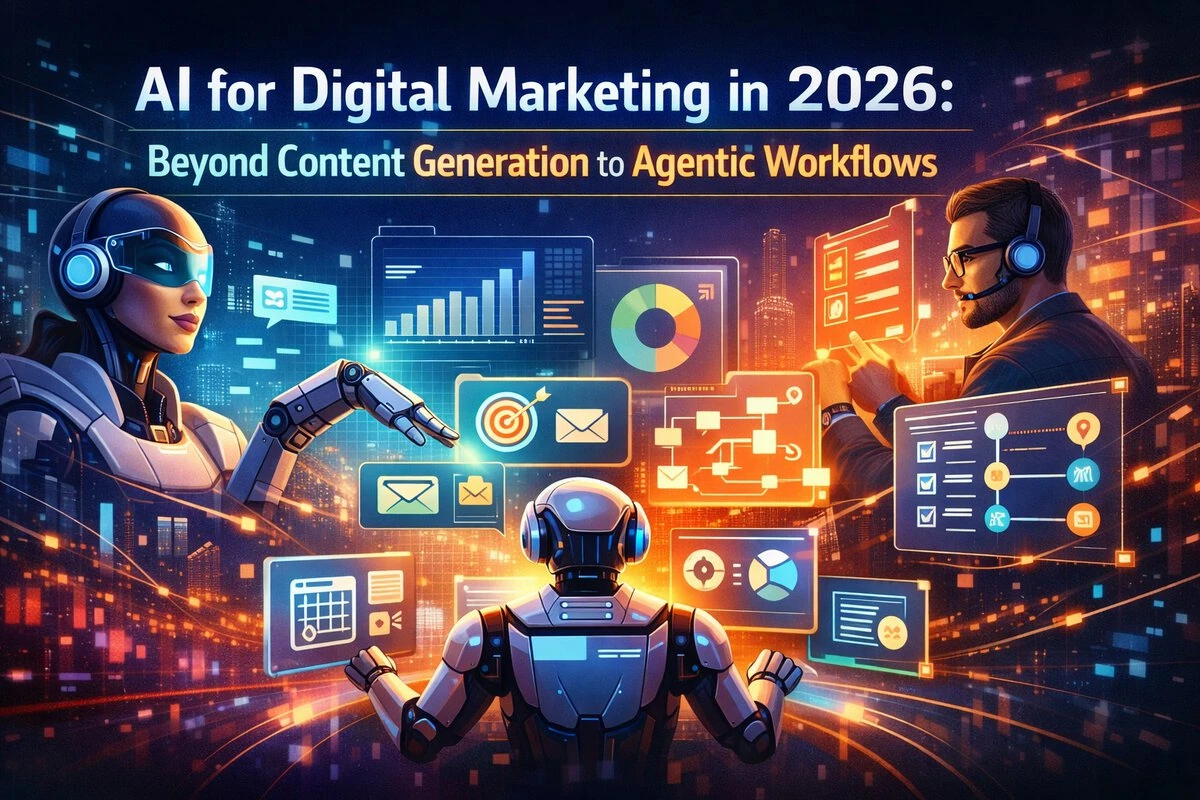
Digital marketing skills and AI-based marketing excellence matter significantly in 2026 due to market demand and consumer behavior shifts. 66 of the marketers out of 100 use AI for daily marketing work, according to HubSpot. Marketing skills integrated with AI improve distribution speed & accuracy of offers and messages. 80% of companies are using AI to improve efficiency and productivity, according to McKinsey and Company. Most companies are inclined to implement better and faster delegation & automation systems via expert supervision. In short, a digital marketing skilled individual is in demand to do effective & efficient marketing for better reputation, lead gen, and cash flow for companies.
“AI is not going to take your job. Somebody using AI will.”
– Dan Martell (serial tech entrepreneur)
Marketing Skill Tiers — What to Learn First
Depending on the marketing channels and platforms, technical skills in marketing differ in terms of tactics and functionality. Each platform and channel of marketing demands a distinct format, message style, positioning, and technical optimization for high-quality distribution of awareness.
For instance:-
- SEO and content engineering require fundamentals of web crawling, search, and AI engine marketing strategies with HTML and CSS guidelines for website management
- Video marketing demands high-quality hooks and short-form video production for better visibility and long-form for authority
- Paid ads, including Google Ads, Meta Ads, LinkedIn Ads, etc., demand optimized visual, editorial, and audio copy with an optimized landing page with a trust-building funnel
- AI and Automation marketing skills demand AI integration, prompt engineering with a smooth, streamlined workflow, automation of operations, and fine-tuning for optimization of output
- CRM management in sales demands high-quality automation and a systematic skill set to facilitate prospecting, nurturing, closing, client acquisition, and service
Marketing skills, types, and descriptive definitions of digital marketing in Hindi have been discussed in our previous marketing notes.
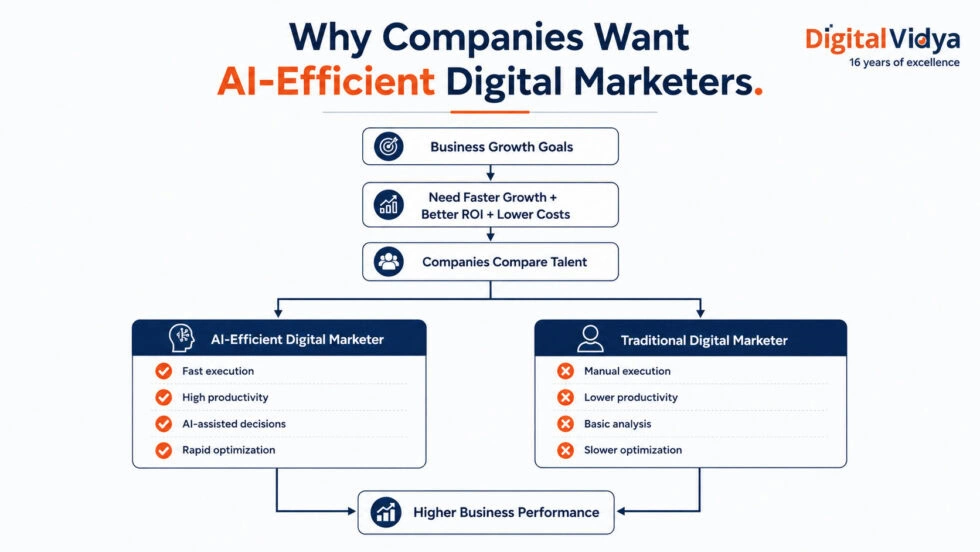
Let’s take a look at the reasons why the majority of brands are looking for AI-efficient marketing specialists in the image below:
Strategic & soft skills (Positioning, Project management, Communication, Customer research)
Marketing in digital channels is not tangible like physical banners or newspapers. However, popular digital marketing content consists of high-intensity emotional pulls and real-life utility.
Every written message, title, visual copy, and audio hook catches and holds the attention of the relevant viewers. With technical skills in marketing, soft skills are mandatory in order to become top digital marketers. Graduate employers report that communication, teamwork, and interpersonal skills are valued more than AI skills alone during hiring decisions, according to The Australian report 2026.
To attract and retain attention for a targated viewers, brand positioning is non-negotiable. Consumers or viewers need to know why they must listen and continue to follow them in the long term.
In any marketing campaign, the number of operations will drastically increase with time as compared to the initial stage of the funnel. Structured project management helps to maintain consistent and efficient marketing material production, distribution, and growth hacking. It helps to focus on the main objective of any marketing campaign without getting lost in the process.
“Every marketing action must align with the core goals of each campaign; it’s not just checklist deliverables…”
Based on the ICP, every piece of content is optimized for better attention and retention quality. Relevant message hooks and keeps relevant community tied to a brand or problem solvers.
Therefore, nuanced introspection of pain, goal, vision, and preferences of viewers gives incredible clarity and shapeness of message and storytelling. With clarity and confidence, marketing copywriting becomes 2X more effective to land with the accurate audience. Building a community leads to establishing a voice. It increases the opportunity to engage and understand the production of goods and services.
Skill-by-skill deep dives
1. Generative AI & Prompt Engineering
Learning AI and prompt engineering in marketing increases the ability to automate content creation, predict consumer behavior, and personalize user experiences. It involves fundamentals of machine learning and Large Language Models (LLMs) to automate processing in research, content creation, auditing, publishing, data management, and growth hacking.
A qualified AI-based marketer has prompt engineering skills for writing, copywriting, SEO, research, image, and video generation, etc.
Learn More about AI in Digital Marketing in CADMM, joined by 120k+ students from top experts and trainers.
2. Advanced Data Analytics & Interpretation
The backbone of digital marketing is tracking, auditing, and adjusting the position, offer, and messages of campaigns based on consumer behavior metrics. Most brands seek AI-efficient digital marketers in order to decrease Customer Acquisition Cost (CAC) and Life Time Value (LTV).
Data analytics allows marketers to track the customer journey, measure ROI, and make informed decisions based on real-time performance metrics.
With the “Death of the Cookie,” marketers must rely on First-Party Data. Skills in GA4, BigQuery, and SQL are becoming standard for those aiming for high-paying roles. Marketers must be able to turn “big data” into “actionable insights.”
3. Search Engine Optimization (SEO 2.0)
In SEO, brands demand skill sets to help increase exposure outside of the website (LLM/AI chat interface, search engines, interest-specific forums, etc.) Modern SEO requires a focus on Search Generative Experience (SGE), technical health, and high-quality “Information Gain” that AI cannot replicate.
SEO is no longer just about keywords; it’s about Entity-based search and User Intent. Understanding how to optimize for voice search, visual search, and featuring on AI chat answer interfaces are fundamental requirements.
Thanks to our CADMM for streamlining SEO using AI without spamming the web with low quality contents.
4. Content Strategy & Storytelling
Strategies in content marketing have become a mandatory process in any form of content marketing due to AI-based mass produced low quality contents.
AI can write, but it cannot relate.
AI is capable of writing more, giving more, and faster content supply, but it can’t create new, relevant, and prominent data with unique aspects, analogies, and stories.
Brands are looking for marketers who can craft authentic stories that build community and trust. This includes video scripting, podcasting, and long-form thought leadership.
“ Most popular content has massive value per word; not words of value “
5. Performance Marketing & Paid Media
Performance marketing is a data-driven approach where advertisers only pay when a specific action—such as a click or sale—is completed. For instance, Google Ads, Meta Ads, Pinterest Ads, LinkedIn Ads, etc. are used in order to drive sales for goods and services.
In 2026, managing PPC (Pay-Per-Click) requires an understanding of Algorithm-Based Bidding. Using AI for paid ads has become 10x more efficient and effective for pattern recognition and large data processing.
6. Social Media Orchestration
Social media has become an interesting medium for consumers. Brands seek SMM professionals with incredible storytelling ability to capture and retain the attention of viewers to build a brand.
Social media is now a discovery engine. Skills in short-form video (YouTube shorts/Reels) and social commerce (selling directly on-platform) are the highest priority for B2C brands. On new social media, sudden demand for raw, authentic, humanized content is taking place, opposite to the demand for AI content.
7. Conversion Rate Optimization (CRO)
As mentioned earlier, brands want to decrease the cost of acquisition per lead using conversion rate optimization. They want marketers with advanced systematic skills to collect, store, structure, and analyze visitors more cost-effectively. To decrease CAC, marketers need skills in advanced data analytics, pattern recognition, gap identification, and ad copy suggestions using automation.
See marketing roles, the reason why it pays well, and the core skillsets required to excel in these positions below:
| Rank | Role / Specialisation | Why it pays well | 2–4 core skills (hard + soft) |
|---|---|---|---|
| 1 | Performance Marketing Specialist | Direct ownership of ROI, ROAS, CAC, and paid growth budgets | Google Ads, Meta Ads, A/B testing, analytical thinking |
| 2 | AI Marketing Specialist | Premium skill area because AI tools improve speed, targeting, and campaign efficiency | Prompt engineering, AI campaign tools, experimentation mindset, adaptability |
| 3 | Marketing Analyst / Digital Analytics Specialist | Strong demand for data-driven decisions and attribution | GA4, SQL/Excel, dashboards, problem solving |
| 4 | SEO Specialist / Technical SEO | Organic growth is high-value and compounding; technical SEO pays more | Technical audits, keyword strategy, Search Console, curiosity |
| 5 | Marketing Automation Specialist | Drives lifecycle marketing, nurture flows, and CRM efficiency | HubSpot/Salesforce, workflow design, lifecycle thinking, attention to detail |
| 6 | Growth Marketer | Focuses on experimentation across acquisition, activation, and retention | Funnel analysis, experimentation, cross-functional collaboration, ownership |
| 7 | Content Strategist | Strong content can lower CAC and build authority across channels | Content planning, audience research, storytelling, strategic thinking |
| 8 | Digital Marketing Manager | Oversees multiple channels and performance outcomes | Channel strategy, team coordination, reporting, leadership |
| 9 | E-commerce / D2C Marketing Specialist | Revenue-linked role tied closely to conversion and repeat purchase | Marketplace ads, CRO, retention, consumer insight |
| 10 | Brand Manager / Integrated Marketing Lead | Higher pay at senior levels due to business impact and multi-channel ownership | Brand strategy, communication, stakeholder management, decision making |
Overall, a digital marketing professional gets paid well due to the ability to solve complex problems in marketing more cost-effectively and efficiently.
” The bigger the problem a marketer solves, the more cost-effectively the marketer spreads awareness and brings desired outcomes, the better they get paid…”
Watch how our latest student testimonials talk about digital marketing skill development experience in 2026, below:
Top Digital Marketing Skills For Freshers
In the fast-evolving world of digital marketing, freshers need a diverse skill set to stand out. This infographic breaks down the top digital marketing skills into five crucial categories, providing a roadmap for newcomers to the field. Let’s dive into the key competencies that will set you apart in your digital marketing career.

Strategical Skills
Strategic skills help marketers connect business goals with customer needs, market opportunities, and measurable marketing outcomes. These abilities improve decision-making, campaign planning, resource allocation, and long-term business growth.
- Build marketing strategies aligned with business goals, customer needs, competitive insights, and measurable growth opportunities.
- Develop strong brand positioning using consistent messaging, customer trust, and memorable digital experiences across every channel.
- Understand complete customer journeys to improve engagement, satisfaction, conversions, retention, and long-term customer loyalty.
- Analyze competitors regularly to identify market gaps, emerging trends, strengths, weaknesses, and business opportunities.
- Plan campaigns with clear objectives, realistic budgets, appropriate channels, performance metrics, and continuous optimization strategies.
- Use customer research, business data, and marketing insights before making important strategic decisions.
- Review campaign performance frequently and refine strategies using analytics, customer feedback, and changing market conditions.
Creative Skills
In this section, we’ll explore creative skills that help marketers communicate ideas through engaging content, visuals, videos, and user-friendly digital experiences. Strong creativity improves audience attention, brand recall, engagement, trust, and overall marketing performance.
- Create valuable content matching audience intent, business goals, search behavior, and different stages of the customer journey.
- Design professional graphics that strengthen brand identity, improve communication, and increase content engagement across digital platforms.
- Produce informative videos that simplify complex topics, increase audience retention, and build stronger emotional brand connections.
- Develop platform-specific social media content using creativity, storytelling, trends, and audience participation to improve organic reach.
- Design intuitive user experiences that reduce friction, improve navigation, encourage interactions, and increase website conversions.
- Maintain consistent creative elements across content, visuals, videos, and digital campaigns to strengthen long-term brand recognition.
- Improve creative performance continuously using audience feedback, engagement metrics, content testing, and evolving digital marketing trends.
Technical Skills
Technical skills help marketers execute campaigns efficiently using modern platforms, automation, analytics, and website technologies. These capabilities improve visibility, lead generation, customer engagement, campaign performance, and marketing scalability.
- Optimize websites using SEO best practices to improve search visibility, organic traffic, user experience, and qualified lead generation.
- Manage PPC advertising campaigns through audience targeting, keyword research, bidding strategies, and continuous performance optimization.
- Build email marketing campaigns that nurture prospects, increase customer retention, and generate consistent long-term business revenue.
- Automate repetitive marketing tasks using workflows, customer segmentation, behavioral triggers, and personalized communication sequences.
- Understand website fundamentals including WordPress, HTML, CSS, tracking codes, forms, and basic technical implementation requirements.
- Integrate marketing tools, customer data, automation platforms, and analytics systems to improve campaign efficiency and reporting accuracy.
- Monitor technical performance regularly and optimize websites, campaigns, and marketing systems using measurable performance insights.
Analytical Skills
Analytical skills help marketers understand customer behavior, measure campaign success, and make confident decisions using reliable marketing data. Better analysis reduces guesswork and improves business growth through continuous optimization.
- Collect and analyze marketing data to identify trends, customer behavior, campaign performance, and profitable business opportunities.
- Measure website performance using Google Analytics to understand traffic sources, user engagement, conversions, and visitor behavior.
- Conduct A/B testing to compare marketing ideas, improve user experiences, and increase campaign effectiveness through validated decisions.
- Evaluate social media performance using engagement metrics, audience insights, content effectiveness, and advertising performance indicators.
- Optimize conversion rates by identifying user barriers, testing improvements, and simplifying important customer decision-making processes.
- Transform marketing reports into actionable business recommendations using clear performance indicators and measurable growth opportunities.
- Continuously improve campaigns through experimentation, customer insights, performance monitoring, and evidence-based marketing decisions.
Communication Skills
Communication skills help marketers build trust, explain ideas clearly, manage relationships, and influence customer decisions across multiple digital platforms. Strong communication strengthens brands, improves collaboration, and increases client satisfaction.
- Write persuasive copy that encourages customer action through clear messaging, valuable information, and compelling calls-to-action.
- Manage social media conversations professionally to strengthen community engagement, customer relationships, and long-term brand credibility.
- Build positive public relations through reputation management, media communication, influencer collaboration, and transparent brand messaging.
- Deliver professional presentations that explain marketing strategies, campaign results, business insights, and future recommendations confidently.
- Maintain strong client relationships through active listening, expectation management, regular communication, and solution-focused problem-solving.
- Adapt communication styles according to audiences, platforms, business objectives, and different stages of the customer journey. Build long-term trust by communicating consistently, honestly, professionally, and with genuine customer-focused value.
Conclusion
In conclusion, the digital marketing landscape is constantly evolving, demanding a diverse skill set from aspiring professionals. From strategic thinking to creative prowess, technical expertise to analytical acumen, and effective communication, these skills form the foundation of a successful digital marketing career. As we’ve explored, each skill category offers unique benefits and opportunities for growth.
For those looking to dive deeper into specific areas, consider exploring topics like the “Benefits of Social Media Marketing” to understand how these skills apply in real-world scenarios. Embrace these skills, and you’ll be well-equipped to thrive in the dynamic world of digital marketing.
Now that you know which skills to master, the next step is understanding which roles actually require them — and what each role pays. Each of the skills listed above maps directly to specific digital marketing positions, from SEO Specialist and PPC Manager to Growth Marketing Manager and AI Marketing Specialist. See which roles match your skill set in our complete guide to the top 20 digital marketing jobs in 2026, with salary data, career paths, and hiring tips for each position.
The most effective way to develop these in-demand skills systematically is through a structured training program. Our digital marketing course content guide for 2026 maps exactly which modules build each of these competencies — from generative AI and SEO to performance marketing and data analytics.
Frequently Asked Questions
Which digital marketing skill is most in demand in 2026?
The most sought-after marketing skills are Data Analytics and AI Integration in 2026.
Companies need professionals who can bridge the gap between technical data and creative strategy at scale.
Can I learn digital marketing skills for free?
Yes, many platforms offer foundational marketing knowledge for free (e.g., Google Digital Garage, HubSpot Academy). For disciplined, time-bounded growth, learning paid AI-integrated marketing courses with certified, hands-on project experience seems practical.
Is coding required for digital marketing?
Not mandatory, but it’s a complementary skill set in digital marketing.
A basic understanding of HTML, CSS, and SQL is a “force multiplier” that allows you to communicate better with developers and handle technical SEO/Data tasks.
How long does it take to master digital marketing?
To master digital marketing, the foundational understanding comes within 3–6 months. For mastering a special skill for a special channel of marketing, a practitioner must focus on 8,300-10,000 iterations in a consistent manner. It often takes approximately 60-100 months.
Anything longer seems like stagnation because the industry changes so rapidly; “mastery” is a continuous process of upskilling every year.
Are soft skills important in digital marketing?
Absolutely. Soft skills such as strategic thinking, adaptability, and emotional intelligence are critical for managing teams and navigating the rapid shifts in AI technology. Unlike technical skills, soft marketing skills help to humanize content based on interest graphs, psychographics, and demographics.
Among digital marketing skills, social media expertise is increasingly valuable. Skills like paid social advertising, analytics, and influencer management command premium salaries. See which are the highest-paying social media marketing skills in 2026.